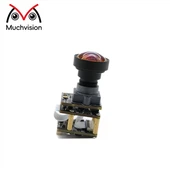
When designing an embedded vision system, every engineer faces a core question: Should I choose a color camera or a monochrome camera? This seemingly simple choice hides profound considerations regarding lighting, resolution, computing performance, and application scenarios.
As a consultant specializing in camera modules, this article will provide an in-depth analysis of the core technologies and applications of these two camera types. We will begin by examining the imaging principles of color cameras, explore the unique advantages of monochrome cameras, and help you make the most informed decision based on your project needs.
What is a Color Camera?
The world we see with our naked eyes is in color, but a camera's image sensor itself cannot directly distinguish colors. It can only record the intensity of light based on the number of photons. To enable cameras to capture color, engineers use a clever technique: a tiny color filter overlays on each pixel.
This way, each pixel only records one of the three colors: red, green, or blue. These scattered color information is then processed and synthesized into the color image we see.

Color Filter Array and Bayer Pattern
To effectively capture color information, the sensor surface of a color camera is covered with a color filter array (CFA). The most common arrangement is the Bayer pattern.
The Bayer pattern uses a 2x2 pixel as the basic unit, with two green filters, one red filter, and one blue filter arranged. This design mimics the human eye's greater sensitivity to green light, allowing us to capture richer green details.
What is Demosaicing?
Because each pixel only records information for one color, the raw data output by the sensor is actually a "patterned" image, not the familiar color image. To obtain a complete color image, a key digital signal processing step is required: demosaicing.
Demosaicing is a computational process that uses the color information of neighboring pixels to interpolate the missing color information for each pixel. This process is crucial for color camera imaging, but it also introduces additional computational burden and the potential for artifacts, making it a major pain point in color imaging.

What is a Monochrome Camera?
Unlike color cameras, a monochrome camera's sensor has no filters. This means each pixel directly receives all wavelengths of light and records their complete intensity information.
It lacks a Bayer array, and therefore requires no demosaicing. The sensor captures a pure grayscale image, with the brightness of each pixel representing the total number of photons received at that point. This pure imaging method gives monochrome cameras unique advantages.
Digital camera for black and white photography
While black and white photography is often considered an artistic form, in the embedded vision field, the choice of a monochrome camera is purely based on performance. The value of monochrome digital cameras in industrial applications goes far beyond aesthetics.
They are the choice for extreme performance, particularly in terms of light sensitivity, spatial resolution, and computational efficiency. For inspection tasks that don't require color information, monochrome cameras are the undisputed choice.
Why Do Some Embedded Vision Systems Need Monochrome Cameras?
Have you ever wondered: Are monochrome cameras really necessary in modern embedded vision systems? The answer is yes. Unlike mobile phones or consumer cameras, industrial applications have unique and demanding performance requirements, which often make monochrome cameras a better choice. Here are a few key advantages that make monochrome cameras indispensable in many systems:
- Higher light sensitivity: Because they lack a filter array, each pixel receives more photons. This makes monochrome cameras superior in low-light environments, making them ideal for low-light imaging.
- Higher spatial resolution: Monochrome cameras eliminate the need for demosaicing; each pixel represents independent brightness information. This results in higher resolution and clarity, free of interpolation artifacts-critical for high-precision inspection tasks.
- Lower computational overhead: Because demosaicing is not required, the image processing pipeline for monochrome cameras is simpler and computationally lighter. This allows the system to operate at a higher frame rate or conserve computing resources at the same frame rate. Stronger
- spectral adaptability: Black and white cameras are also sensitive to invisible light such as infrared (IR) and ultraviolet (UV), making them the only choice for special applications such as near-infrared detection.
Embedded Vision Applications of Monochrome Cameras
As mentioned earlier, choosing the right camera type depends on the specific application requirements. While it's difficult to generalize, we can use specific examples to illustrate the value of a monochrome camera.
Iris Recognition
In many biometric systems, iris recognition is used as an authentication method. Because iris details are primarily texture-based rather than color-based, and irises strongly reflect near-infrared (NIR) light, monochrome cameras, with their high sensitivity and high resolution in the NIR spectrum, are ideal for iris recognition systems. Of course, if the system needs to perform other types of analysis, color information may still be required.

Number Plate Recognition (ANPR)
ANPR (Automatic Number Plate Recognition) systems capture license plate images with a camera and then use optical character recognition (OCR) technology to read the license plate information. This task completely eliminates the need for color information. Furthermore, ANPR cameras often need to operate at night or in low-light conditions, requiring high sensitivity. Therefore, monochrome cameras, with their excellent low-light performance, are the preferred choice for these systems. Of course, if you encounter color license plates, a color camera is the only right choice.
Barcode Scanning
Barcode scanning is a common technology in many industrial and commercial applications. It helps robots navigate, industrial handheld devices track products, and quality inspection systems identify packages. Since most barcodes are black and white, monochrome cameras, with their high contrast and high resolution, can efficiently and accurately perform these tasks.
High-Precision Inspection
Monochrome digital cameras shine in many high-precision inspection applications due to their high resolution and high light sensitivity. In wafer inspection, they can clearly capture tiny defects on chips. In industrial metrology, they provide sharper edge information, ensuring accurate measurement results.
The purity of monochrome cameras makes them an ideal choice for industrial applications with stringent image quality requirements.
Challenges and Breakthroughs in Color Imaging
In embedded vision, color imaging versus black-and-white imaging isn't a decisive battle of superiority, but rather a matter of trade-offs. The advantage of color cameras lies in their ability to provide rich color information, but this comes at the cost of reduced light sensitivity, resolution, and higher computational overhead. Monochrome digital cameras, on the other hand, offer pure image data, higher light sensitivity and resolution, making them more suitable for performance-critical scenarios.
De-mosaicing algorithms in color imaging are still being optimized, promising even higher image quality in the future. Black-and-white cameras will continue to maintain their irreplaceable position in specialized fields such as scientific research, healthcare, and high-precision industrial inspection.
Summary
In embedded vision, the choice between a monochrome camera and a color camera ultimately depends on your application requirements. Color cameras, through color filter arrays and demosaicing, provide rich color information, making them suitable for scenarios requiring color distinction and the mainstream solution for color imaging.
Monochrome cameras, on the other hand, offer irreplaceable advantages in low-light environments, high-precision detection, and non-visible light imaging, thanks to their higher light sensitivity, resolution, and simpler processing. Understanding the trade-offs between these two technologies is key to successfully designing embedded vision systems.
Muchvision helps you with both monochrome and color vision solutions.
Facing a difficult decision between color and monochrome cameras for your embedded vision project? Contact our expert team today. We will provide expert camera module selection consultation based on your specific application needs, helping you create the most suitable vision solution