 ×
×
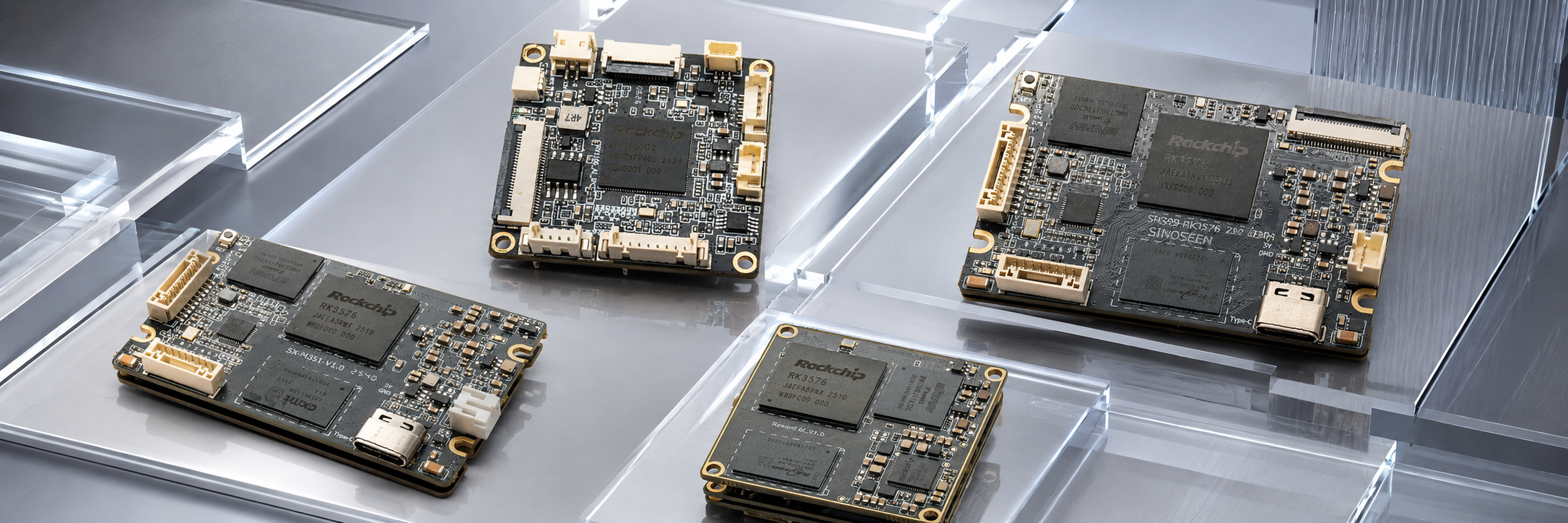
Manufacturing facilities today face unprecedented pressure to optimize production efficiency, reduce downtime, and respond instantly to equipment failures. Edge computing has emerged as a transformative technology that addresses these challenges by processing data closer to the source rather than relying solely on centralized cloud infrastructure. This shift fundamentally changes how manufacturing operations detect problems, make decisions, and maintain competitive advantage in an increasingly connected industrial landscape.
Understanding the practical value of edge computing requires examining real-world manufacturing scenarios where latency reduction and local processing directly impact production outcomes. The technologies enabling this shift—including IoT sensors, local processing units, and intelligent gateways—are becoming standard in forward-thinking factories. As we approach 2026, manufacturers must recognize which use cases deliver measurable returns and how to prioritize deployment across their operations.
Manufacturing equipment generates continuous streams of sensor data that traditional cloud-based systems struggle to process fast enough for meaningful intervention. Edge computing enables machines to analyze vibration patterns, temperature fluctuations, and acoustic signatures locally, identifying degradation before catastrophic failure occurs. When latency is measured in seconds rather than milliseconds, maintenance teams lose critical time to prevent costly downtime. By deploying edge intelligence directly on or near equipment, manufacturers achieve sub-100-millisecond response times that make the difference between planned maintenance and emergency repair.
This use case particularly benefits from edge computing because equipment diagnostics require immediate pattern recognition without network dependency. IoT sensors embedded in motors, pumps, and hydraulic systems transmit raw or lightly processed data to local edge nodes that run machine learning models trained on historical failure signatures. The guide to implementing this strategy involves selecting equipment where unplanned downtime exceeds replacement costs and where production lines can tolerate brief analysis cycles. By 2026, this approach will dominate predictive maintenance strategies across high-volume manufacturing environments.
The latency advantage of edge computing directly translates to faster maintenance response and higher equipment availability. Traditional cloud architectures introduce network transit delays that can stretch decision-making timelines from seconds to minutes, an eternity in production environments. Edge nodes located at the factory floor or integrated into production control systems eliminate this latency penalty entirely. A guide to latency reduction reveals that edge deployments reduce analysis cycles by 70-90% compared to cloud-only approaches, enabling maintenance teams to act on insights while problems remain small and manageable.
IoT devices communicating through edge infrastructure gain the additional benefit of network resilience; if cloud connectivity drops, local processing continues uninterrupted. This redundancy proves invaluable in manufacturing settings where temporary network outages cannot halt operations. The role of edge computing in supporting resilient production systems will intensify through 2026 as manufacturers prioritize uptime over connectivity convenience.
Manufacturing quality control demands real-time decision-making that cloud-dependent systems cannot reliably provide. Edge computing enables computer vision systems to inspect products at full production line speed, detecting surface defects, dimensional errors, and assembly faults within the milliseconds available before the next item arrives. IoT cameras and sensors communicate directly with edge processing nodes that run AI models, making pass-fail decisions locally without waiting for cloud round-trip latency. This use case exemplifies where edge computing delivers non-negotiable value; cloud-based quality control cannot match the speed requirements of modern high-speed production lines.
A guide to implementing vision-based quality control on edge infrastructure requires understanding local processing power requirements and camera specifications. Manufacturers deploying this capability typically see 40-60% improvement in defect detection rates and corresponding reductions in recalled products reaching customers. The latency reduction from milliseconds to microseconds transforms quality assurance from a sampling-based statistical process into comprehensive real-time inspection.
Beyond detection, edge computing enables immediate automated response to quality issues. Robotic sorters and rejection mechanisms respond instantly to defect signals generated by local vision systems, removing non-conforming parts before they continue through production. This closed-loop feedback through edge infrastructure achieves response times impossible with cloud-based systems. IoT integration allows production managers to monitor rejection rates and adjust processes in real-time rather than discovering batch quality problems days later during final inspection. By 2026, manufacturers not implementing edge-based quality systems will face competitive disadvantage in markets where traceability and zero-defect initiatives dominate customer requirements.
Modern manufacturing increasingly adopts flexible, reconfigurable production lines that adjust processing parameters based on real-time demand, material availability, and equipment status. Edge computing enables these systems to make dynamic scheduling decisions locally without depending on centralized planning systems. IoT sensors tracking material flow, equipment availability, and quality metrics feed directly into edge nodes running optimization algorithms that balance throughput, quality, and efficiency. The latency advantage becomes critical when production requirements change faster than cloud-based planning systems can communicate and implement new schedules.
A guide to autonomous line control reveals that edge-enabled systems reduce production scheduling cycles from hours to minutes, dramatically improving responsiveness to market changes. This capability becomes increasingly valuable as manufacturing shifts toward on-demand, customized production. The IoT infrastructure supporting autonomous operations generates massive data volumes that edge computing processes locally, reducing network congestion and cloud storage costs while enabling faster decision-making.
Edge computing drives manufacturing sustainability by enabling real-time energy optimization at the equipment level. IoT power monitors detect inefficiencies instantly, and edge nodes adjust equipment operation to minimize consumption without sacrificing production targets. This approach achieves energy reduction impossible through centralized control due to latency delays in identifying and responding to inefficiency patterns. Manufacturers implementing edge-based energy management report 15-25% reductions in facility energy costs while maintaining or improving production output. As environmental regulations tighten heading toward 2026, this sustainability capability becomes competitive necessity.
Edge computing processes data locally on or near equipment rather than transmitting all information to distant cloud servers, eliminating network transit delays. This proximity reduces response times from seconds to milliseconds, enabling real-time decision-making critical in manufacturing. The guide to latency reduction shows that edge deployments typically achieve 70-90% faster analysis cycles, allowing IoT sensors and production systems to respond instantly to changing conditions.
Use cases requiring real-time response—predictive maintenance, quality inspection, and autonomous line control—deliver the strongest edge computing value. These scenarios depend on latency-free processing that only local edge infrastructure provides. Guide frameworks prioritize scenarios where unplanned downtime exceeds $100,000 per hour or where production speed prevents cloud-based decision-making, ensuring maximum return on edge computing investment.
By 2026, edge computing becomes standard manufacturing infrastructure rather than innovative pilot projects. IoT device proliferation combined with advancing local processing capabilities will drive widespread adoption across predictive maintenance, quality control, and autonomous operations. The guide to future manufacturing emphasizes that competitive facilities will seamlessly integrate edge computing with cloud resources, creating hybrid systems where time-critical decisions happen locally and strategic analytics occur centrally.
 Hot News
2026-09-21
2026-09-18
2026-09-14
2026-09-13
2026-09-09
2026-09-09

 EN
EN