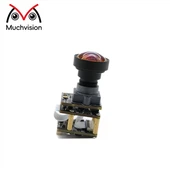
In embedded vision, image quality starts with the camera module lens. Engineers and industry professionals need a deep understanding of this component. This article explains what is a module lens. We'll delve into different camera module lenses, clarify common lens types, and address what a high modulus lens means. We'll also explore specialized options like a camera module wide angle lens and the concept of a camera module without lens.
What is a Module Lens?
A module lens is an optical assembly. It's designed to work seamlessly with an image sensor within a camera module. Its main job is to gather light from a scene. Then, it accurately focuses that light onto the sensor's surface. Without a properly matched camera module lens, the image sensor would only capture unfocused, blurry light.

These lenses are usually compact and precisely made. They're engineered for specific optical properties. This influences factors like field of view, clarity, and distortion. The quality of the module lens directly determines the potential quality of the captured image.
Camera Module Lenses: Anatomy and Specifications
Understanding camera module lenses means recognizing their key attributes. These specifications are crucial for engineers selecting the right lens for their application.
Focal Length
Focal length is a basic property of any camera module lens. It controls image magnification and the field of view (FoV). A shorter focal length gives a wider FoV (like a camera module wide angle lens), capturing more of the scene. A longer focal length provides a narrower FoV but magnifies distant objects. Choosing the right focal length ensures the camera captures the relevant area.
Aperture (F-number)
The aperture (often shown as an F-number, e.g., F/2.0) is the size of the opening. Light passes through this opening to the sensor. A smaller F-number means a larger aperture. A larger aperture lets more light reach the sensor. This is good in low-light conditions. It also affects the depth of field-the range of distances in focus. Larger apertures create shallower depth of field, blurring backgrounds.

Optical Format
The optical format (or image circle) states the size of the image area the camera module lens can project. This must match or be larger than the image sensor. If the lens's optical format is smaller than the sensor, it causes vignetting (dark corners). Common optical formats include 1/4", 1/3", 1/2.3", and 1". Matching the lens to the sensor prevents wasted sensor area and ensures even illumination.
Distortion
Lens distortion refers to defects that make straight lines appear curved in the image. Common types are barrel distortion (lines bow outwards) and pincushion distortion (lines bow inwards). While some distortion can be fixed with software, it's a critical point for precise measurement applications. High-quality camera module lenses are designed to minimize these effects.
What are the Three Types of Camera Lenses? (Common Categorizations)
When discussing what are the three types of camera lenses, it usually refers to broad categories based on focal length and common uses. For camera module lenses in embedded vision, these categories are a good starting point:
- Wide-Angle Lenses: These lenses have a short focal length. They create a broad field of view. They're ideal for capturing expansive scenes, fitting more into the frame. A camera module wide angle lens is common in surveillance, automotive rearview cameras, and virtual reality.
- Standard (Normal) Lenses: These lenses have a focal length similar to the diagonal of the image sensor. They offer a field of view and perspective much like human vision. This results in natural-looking images without much distortion. They are versatile for many general-purpose applications.
- Telephoto Lenses: These lenses have a long focal length. They provide a narrow field of view and significant magnification. They bring distant objects closer. This makes them suitable for long-range surveillance, wildlife observation, or detailed inspection from afar.
Beyond these common types, camera module lenses also include specialized optics. Examples are fisheye lenses (very wide-angle), macro lenses (for close-up detail), and varifocal/zoom lenses (adjustable focal length).

What Does a High Modulus Lens Mean? (In Context of Camera Lenses)
The term "high modulus lens" typically refers to ophthalmic lenses (like eyeglasses or contact lenses). In that context, "modulus" means the material's stiffness or resistance to bending. A high modulus material makes the lens stiffer. This can allow for thinner lenses or greater durability.
However, in the world of camera module lenses, the term "high modulus" is generally not used to describe optical properties. When engineers discuss high performance in camera module lenses, they refer to:
- High Optical Quality: Lenses with minimal imperfections like chromatic or spherical aberrations. They offer high resolution and low distortion.
- High Numerical Aperture (NA): Related to aperture, a higher NA means better light-gathering ability and often improved resolution.
- High MTF (Modulation Transfer Function): This measures how well a lens transfers contrast from the object to the image. It indicates sharpness and clarity.
So, if you hear "high modulus" for a camera module lens, it might be a misunderstanding. It could refer to the physical durability or stiffness of the lens material, not its imaging performance. For camera module lenses, focus on optical quality, aperture, and focal length.
Camera Module Wide Angle Lens: Expanding the Field of View
A camera module wide angle lens is vital for applications needing a broad view. These lenses have short focal lengths, often from a few millimeters down to sub-millimeter for extreme fisheye effects.
The key benefit is a much larger field of view. This lets one camera module monitor a huge area. It can reduce the number of cameras needed or capture more context. Common uses include:
- Automotive: Rearview cameras, surround-view systems, and dashcams for full road coverage. The automotive camera market is projected to reach over USD 14.5 billion by 2028 (Mordor Intelligence, 2023), with wide-angle modules being a key component.
- Security & Surveillance: Monitoring large rooms, warehouses, or outdoor areas with fewer cameras. This reduces installation complexity and cost.
- Drones & Robotics: Providing broad situational awareness for navigation and obstacle avoidance.
- Virtual Reality/Augmented Reality: Creating immersive experiences by capturing expansive environments.
While useful, camera module wide angle lenses often cause optical distortions, especially barrel distortion. Engineers must decide if software correction is enough for their application.
Camera Module Without Lens: When is it Needed?
The idea of a camera module without lens might seem strange. But it serves specific, important niches in embedded vision. These modules, also called "lens-less" or "bare sensor" modules, typically provide just the image sensor and its basic electronics/flex cable.
Why choose a camera module without lens?
- Custom Optics Integration: For very specialized applications, standard camera module lenses might not work. Engineers might design custom lens systems. These could be microscopic objectives, specific spectroscopic filters, or complex multi-element arrays. These are then paired directly with the bare sensor.
- Cost Optimization: In extremely high-volume, cost-sensitive projects, removing the pre-assembled lens can offer small savings. This happens if the lens is sourced and integrated separately on a large scale.
- Space Constraints: Sometimes, the overall system design requires an unusual optical path. A standard integrated camera module lens just won't fit. A bare image sensor allows more flexible mechanical mounting and external lens attachment.
However, choosing a camera module without lens means the integrator takes full responsibility for lens selection, mounting, focusing, and protecting the bare image sensor. This adds complexity to the system design.
Conclusion: The Critical Role of the Camera Module Lens
The camera module lens is more than glass; it's the critical front-end component. It shapes the image captured by the image sensor. Understanding what is a module lens, exploring the various camera module lenses available, recognizing different optics categories, and clarifying terms like high modulus lens (or its non-applicability) empowers embedded vision engineers. Whether integrating a camera module wide angle lens for broad views or considering a camera module without lens for custom solutions, choosing the right optic is paramount. It ensures optimal performance in any imaging system. The lens directly impacts image quality, field of view, and suitability for specific applications.
Ready to optimize your embedded vision project with the perfect camera module lens? Contact our experts for tailored guidance and solutions that meet your precise imaging requirements.