

Throughout the evolution of embedded vision, the camera's "eyes" have continuously expanded their perceptual capabilities. From initially capturing visible light to now acquiring the invisible spectrum, machines are gaining a deeper understanding of the world. Traditional infrared (IR) camera applications typically rely on separate infrared and visible light cameras, which introduces challenges with size, cost, and calibration. However, the emergence of RGB-IR cameras has changed this landscape by enabling simultaneous visible and infrared imaging on a single sensor.
As a consultant specializing in camera modules, this article will provide an in-depth analysis of the rise of RGB-IR technology in IR camera applications. We will explore its core technologies, key selling points, and how it is enabling new applications in areas such as drones, security surveillance, and automotive vision.
The Rise of RGB-IR Cameras
In the past, to simultaneously capture high-quality visible and infrared images, engineers typically had to integrate two separate camera systems. This not only increased the size and cost of the camera module but also made image registration and synchronization extremely complex. This technical pain point severely hindered the development of IR camera applications in compact embedded systems.
The rise of RGB-IR cameras addresses this pain point. At its core lies an innovative IR camera sensor. This sensor utilizes a special color filter array (CFA) that, in addition to the traditional RGB filter, also adds a partially transparent filter (i.e., an IR-pass filter). These transparent pixels are specifically designed to capture infrared light, while the RGB pixels capture visible light. This unique pixel arrangement enables a single sensor to simultaneously capture information from two different spectral regions.
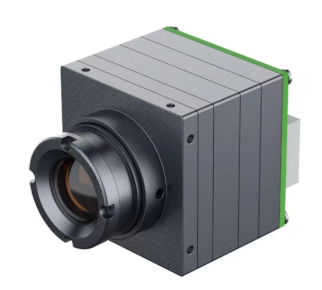
This novel IR camera sensor design enables the camera to generate two independent images with a single exposure: a full-color visible light image and a high-resolution infrared image. All of this is accomplished within a compact IR camera module, greatly simplifying system integration and reducing hardware costs.
Top 10 Embedded Vision Applications of RGB-IR Cameras
RGB-IR cameras, with their unique dual-spectral imaging capabilities, have opened up broad application opportunities in multiple embedded vision fields.
1. Driver and In-Cabin Monitoring
Issue: Traditional visible light cameras struggle to accurately monitor the driver's condition at night or when wearing sunglasses.
Advantages: The infrared channel of an RGB-IR camera can penetrate sunglasses, allowing it to clearly capture a driver's eye movements, blink rate, and facial expressions even in complete darkness. The RGB channel can be used in normal daylight conditions. A single IR camera module can meet both day and night monitoring needs, providing a reliable solution for autonomous driving and driver fatigue monitoring.
2. Covert Surveillance and Security
Issue: Traditional infrared night vision cameras require 850nm infrared LED illumination, which is visible to the human eye and can easily reveal the camera's presence.
Advantage: IR camera sensors can be used with 940nm infrared LEDs, a wavelength completely invisible to the human eye. The infrared channel of an RGB-IR camera allows for covert surveillance without visible light, while the RGB channel captures high-definition, color images during the day. This dual capability enables a single IR camera module to handle all-weather security tasks.
3. Drone Reconnaissance and Inspection
Issue: Drones have extremely stringent requirements for weight, size, and power consumption. Equipping both visible light and infrared cameras significantly increases payload and shortens flight time.
Advantages: IR cameras for drones are a perfect application for RGB-IR technology. A lightweight IR camera module can simultaneously provide visible light images for routine inspections and positioning, as well as infrared images for thermal imaging analysis. For example, in agricultural plant protection, infrared images can reveal crop health; in industrial inspections, they can be used to detect thermal anomalies in equipment.
4. Biometrics and Access Control Systems
Issues: Traditional facial recognition technology is susceptible to lighting changes, makeup, or photo manipulation.
Advantages: The infrared channel of an RGB-IR camera can capture the unique vein pattern and skin reflectivity characteristics of the face, which are difficult to forge. Furthermore, the stability of infrared imaging makes it unaffected by ambient light, providing a more accurate and secure biometric solution. This dual-channel verification significantly enhances system security and robustness.

5. Industrial Quality Control
Issue: Certain product defects, such as internal stress, liquid content, or minor scratches, are difficult to detect under visible light.
Advantage: IR camera applications are thriving in industrial quality inspection. The infrared channel of an RGB-IR camera can perform transmission or reflection analysis on materials, revealing internal structures or chemical composition that are invisible to visible light. For example, it can detect liquid levels in plastic bottles, the integrity of tablet packaging, or detect internal decay in fruit during food processing.
6. Medical Imaging and Health Monitoring
Issue: In contactless health monitoring, visible light images are easily affected by ambient lighting and skin tone variations.
Advantage: The infrared channel of an RGB-IR camera can be used for contactless heart rate and blood oxygen monitoring because it can capture subtle changes in blood flow under the skin. Infrared light, after penetrating the skin, provides more stable and accurate physiological signals, unaffected by skin tone and ambient light.
7. Retail Analytics and Smart Shelves
Issue: Traditional shelf monitoring systems struggle to accurately analyze customer flow and identify items in dimly lit or shadowed areas.
Advantages: RGB-IR cameras enable round-the-clock customer flow analysis in retail scenarios. The infrared channel provides stable images at night or in low light conditions, enabling applications such as heatmap analysis and inventory counting. Combined with the color information from the RGB channels, this allows for more accurate identification of different products.
8. Robot Navigation and Obstacle Avoidance
Issue: Robots need to navigate reliably in complex indoor and outdoor environments, but visible light cameras are prone to failure at night or in scenes with drastic changes in lighting.
Advantages: A robot with an integrated IR camera module uses its infrared channel to provide reliable obstacle detection and path planning information in complete darkness, while the RGB channel is used for visual recognition tasks during the day. This dual-channel fusion enables autonomous navigation in all weather conditions and all scenarios.
9. Smart Home and Privacy Protection
Issue: Smart home devices typically require 24/7 monitoring, but users are concerned about privacy breaches.
Advantages: RGB-IR cameras can detect human activity and presence using the infrared channel, eliminating the need to activate the visible light camera. This allows devices to perform basic security and automation functions without recording color images, significantly alleviating users' privacy concerns.
10. Automotive ADAS and Night Vision
Issue: At night or in inclement weather (such as smog), a car's ADAS system's ability to identify pedestrians and obstacles is significantly reduced.
Advantage: The infrared channel of an RGB-IR camera has greater penetration through smoke and haze, effectively enhancing night vision. By combining the color and texture information from the RGB channels, machine vision algorithms can more accurately identify pedestrians, animals, and obstacles on the road, thereby improving driving safety.
Summary
The emergence of RGB-IR cameras is a significant technological breakthrough in the embedded vision field. Through innovative IR camera sensor design, they fuse visible and infrared light on a single chip, bringing unprecedented flexibility, compactness, and cost-effectiveness to IR camera applications. From drones to security surveillance, from in-vehicle vision to industrial quality inspection, this dual-spectrum fusion technology is empowering a growing number of embedded systems, helping them gain insight into the invisible world.
Muchvision is here to help
Does your project require simultaneous acquisition of visible and infrared images? Contact our expert team today and we'll provide expert IR camera module selection and integration solutions to help you build a high-performance embedded vision system!


