In the competitive world of embedded vision, image quality really begins with the sensor. Sony has long been a dominant force here, especially with its Sony Exmor and Sony STARVIS sensor lines. These technologies have fundamentally transformed how machines "see," enabling incredible clarity and sensitivity, even in challenging environments. For embedded vision engineers, understanding the nuances between these powerful sensor families is crucial. It directly impacts system performance, powering everything from advanced robotics to high-stakes surveillance.
What Are Sony Exmor and STARVIS Sensors?
Sony Exmor is Sony's brand for a family of CMOS image sensors. These sensors use a special design with on-chip noise reduction and a unique way to convert signals (column-parallel A/D conversion). This helps minimize noise when data is read out, giving you much cleaner images. Exmor sensors are widely used in many products, like consumer cameras, smartphones, and industrial vision systems.
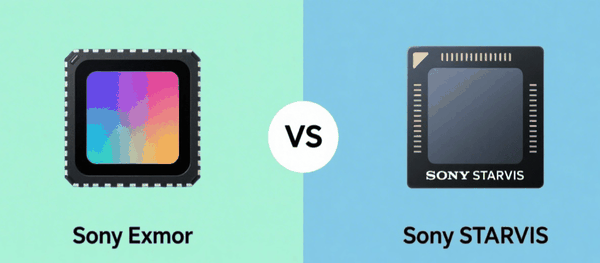
Sony STARVIS is a specific type of Sony Exmor sensor technology. Its name, "STARVIS," stands for "Star Visibility." This perfectly highlights its main strength: exceptional low-light performance. STARVIS sensors are known for capturing clear, high-quality color images even in extremely dark conditions, performing far better than standard CMOS sensors.
The Evolution of Sony's Exmor and STARVIS Technologies
Sony's journey in image sensor technology has been one of continuous innovation, always pushing the boundaries of light capture and digital imaging.
The Rise of Sony Exmor: Innovation in CMOS
The Sony Exmor brand first appeared in 2008. This marked Sony's big push into high-performance CMOS (Complementary Metal-Oxide-Semiconductor) image sensors. Before Exmor, CCD (Charge-Coupled Device) sensors were often preferred for high-quality imaging. Exmor technology introduced column-parallel A/D conversion. This meant each column of pixels had its own analog-to-digital converter. This allowed for faster processing and less noise than traditional CMOS designs. This innovation made CMOS a viable, and often superior, alternative to CCDs across many diverse applications.
The Dawn of Sony STARVIS: A Low-Light Breakthrough
Building on the robust Exmor foundation, Sony introduced Sony STARVIS technology in 2015. This was a major leap forward specifically in low-light sensitivity. While standard Exmor sensors offered good performance, STARVIS was engineered to address the critical need for clearer images in near-dark conditions. It achieved this through a sophisticated back-illuminated pixel architecture. This design places the photodiode (the light-sensing part) closer to the light source, vastly improving light collection efficiency. STARVIS quickly became the go-to choice for security cameras, industrial inspection, and automotive vision where visibility in challenging light is absolutely paramount for reliable sensing.
Difference Between Sony Exmor and STARVIS: Key Distinctions Explained
While Sony STARVIS is a specialized subset of the broader Sony Exmor family, there are clear distinctions, particularly concerning their main goals and performance features.
Low-Light Performance: Where STARVIS Truly Shines
The most significant difference between Sony Exmor and STARVIS lies in their low-light capabilities. While all Exmor sensors aim for good image quality, STARVIS sensors are specifically designed for superior performance in very dim conditions. They achieve this through their advanced back-illuminated structure and optimized pixel design. This allows them to capture more light and produce significantly less noise in dark environments. For applications demanding absolute clarity when light is scarce, STARVIS is the undisputed leader in low-light imaging.

Sensitivity and Signal-to-Noise Ratio
Sony STARVIS sensors boast notably higher sensitivity (often measured in mV per 1 lux second) compared to non-STARVIS Exmor sensors. This increased sensitivity directly translates to a much better signal-to-noise ratio (SNR) in low-light scenarios. A higher SNR means the actual image information is far stronger compared to the unwanted noise or interference. This results in cleaner, more usable images when light levels drop. This makes them ideal for demanding surveillance and intricate industrial tasks where image fidelity is paramount.
Pixel Architecture: The Back-Illumination Advantage
Many modern Sony Exmor sensors now incorporate back-illuminated technology. However, STARVIS was specifically designed around this architecture from its very inception to maximize light gathering efficiency. In a back-illuminated sensor, the intricate wiring and circuitry are strategically placed behind the photodiode. This clever design allows more light to directly hit the light-sensitive area, boosting efficiency, especially for very small pixels. This architecture minimizes light loss and internal reflections, further enhancing overall low-light capture.
Target Applications: From General Purpose to Highly Specialized
Non-STARVIS Sony Exmor sensors cover a vast and diverse range of applications. These include everyday consumer cameras and mobile phones to general industrial imaging where overall image quality, speed, and resolution are key considerations. Sony STARVIS, however, targets highly specialized and mission-critical applications where exceptional low-light vision or superior night vision capabilities are absolutely crucial. This includes high-end surveillance systems, automotive cameras designed for safer night driving, industrial machine vision operating in dark environments, and specialized medical imaging requiring enhanced visibility.
Sony STARVIS Low Light Performance: Unparalleled Vision in Darkness
The Sony STARVIS low light performance is truly exceptional, setting a new industry benchmark for clarity in minimal illumination. It's not just about seeing in the dark; it's about getting clear, color images in conditions where traditional sensors would only produce grainy, often black-and-white results.
Enhanced Near-Infrared (NIR) Sensitivity
Beyond just visible light, many models within the Sony STARVIS sensor list also offer remarkably enhanced sensitivity in the near-infrared (NIR) spectrum. This is a crucial advantage for security and surveillance applications that often rely on NIR illumination for discreet night vision. STARVIS sensors can effectively capture clear images using this invisible light. This makes them highly effective for 24/7 monitoring scenarios without introducing visible light pollution. This specific capability is a key factor in their reputation as the best image sensor for night vision.
Superior High Dynamic Range (HDR) in Low Light
Achieving good High Dynamic Range (HDR) in low light is notoriously difficult, but STARVIS sensors excel here too. They can intelligently capture details in both the very dark and relatively bright parts of a scene simultaneously, even when overall illumination is minimal. This advanced capability prevents blown-out highlights and completely blacked-out shadows, providing a more complete and usable image under truly challenging conditions. This dynamic prowess greatly benefits security cameras monitoring, for example, brightly lit gates against a dark background, ensuring no critical details are lost.

Which Sensor is Best for Your Use Case?
Choosing the ideal sensor between different Sony Exmor and Sony STARVIS models depends entirely on the unique demands and specific priorities of your embedded vision application.
For General Purpose and Balanced Performance
If your application requires good overall image quality, decent low-light performance (but not extreme darkness), high resolution, and perhaps high frame rates without needing exceptional night vision, a general-purpose Sony Exmor sensor (one not specifically branded STARVIS) might be the most suitable choice. These sensors typically offer a robust balance of cost, performance, and features, making them ideal for applications like consumer drones, standard industrial cameras, or high-definition broadcasting needs.
For Extreme Low Light and Night Vision Capabilities
If your primary concern is capturing consistently clear, detailed color images in extremely dim conditions, or if your application involves active night vision using NIR illumination, then a Sony STARVIS sensor is almost certainly the best image sensor for night vision for your project. Its unparalleled sensitivity and superior noise reduction in low light make it indispensable for demanding surveillance systems, automotive safety features, industrial quality control in challenging environments, and any scenario where reliable visual data is needed 24/7, regardless of ambient light. You'll find specific, purpose-built models in the Sony STARVIS sensor list perfectly suited for such rigorous scenarios.
Important Considerations from the Sony STARVIS Sensor List
When making your selection, it's crucial to examine the specific model numbers within the extensive Sony STARVIS sensor list. Newer generations of STARVIS (e.g., STARVIS 2) consistently offer further improvements in dynamic range and low-light performance. Engineers should also carefully consider factors like pixel size, overall resolution, interface type (e.g., MIPI CSI-2, GigE Vision), power consumption, and the expected operating temperature range. All these technical specifications must align precisely with the specific low-light needs and environmental conditions of their embedded vision project. For instance, the IMX485 or IMX462 are widely recognized STARVIS options celebrated for their exceptional low-light capabilities.
Summary: Sony's Visionary Impact on Embedded Systems
The Sony Exmor and Sony STARVIS sensor families have undeniably set the gold standard for image capture in the realm of embedded vision. While Exmor broadly defines Sony's high-performance CMOS offerings, STARVIS specifically elevates low-light and night vision capabilities to an unprecedented level of clarity and detail. Understanding the key difference between Sony Exmor and STARVIS is absolutely vital for engineers to make informed and optimal design decisions. The exceptional Sony STARVIS low light performance solidifies its position as the best image sensor for night vision in many demanding and critical scenarios. By meticulously selecting the right sensor from the comprehensive Sony STARVIS sensor list, developers can ensure their vision systems perform flawlessly, delivering crystal-clear images even in the most challenging lighting conditions, thereby addressing critical market pain points and paving the way for groundbreaking innovation.
Unlock Superior Vision with Muchvision`s Sony-Powered Camera Modules
Ready to equip your embedded vision system with industry-leading image sensing capabilities? Explore our cutting-edge range of camera modules featuring the latest Sony Exmor and Sony STARVIS technologies. Whether you need balanced performance for general applications or the absolute best image sensor for night vision for extreme low-light scenarios, we have a robust solution tailored to your needs. Contact our embedded vision experts today. Let's discuss how our advanced modules can bring unmatched clarity, sensitivity, and reliability to your next groundbreaking project.