

Introduction
We know that the camera module is a key component for capturing images. It contains an image sensor to convert light into electrical signals and an image signal processor (ISP) to process these raw data. However, these image data eventually need to be sent to the "brain" of the system - the main processor (CPU, GPU, DSP, etc.) for further analysis, display, storage or decision-making.
The channel connecting the camera module and the main processor is the Camera Module Interface. This interface is not only responsible for transmitting large amounts of image data at high speed, but may also be responsible for transmitting control signals and power supply. Different interface types vary significantly in terms of transmission speed, distance, complexity, and application scenarios. Understanding these camera interface types is critical to selecting the right module and ensuring compatibility with your system platform.
Why Are Camera Module Interfaces Necessary?
The light signal captured by the camera module sensor is processed by the internal circuit (sometimes including ISP) to generate digital image data. The amount of this data is usually large, especially in applications with high resolution and high frame rate. The camera module itself usually does not have strong computing power to perform all image analysis tasks, nor can it directly display or store this data.
Therefore, an efficient and stable interface is needed to quickly and accurately transmit these image data from the module to the external main control chip. The interface is like a highway, ensuring that image information can flow smoothly from the camera module to other parts of the system.
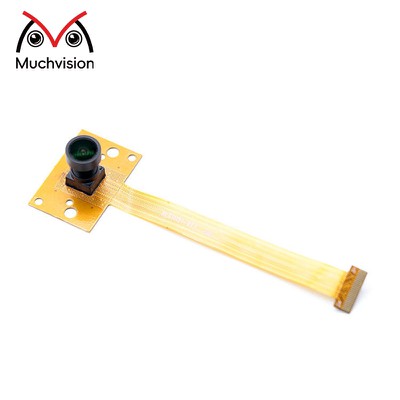
Key Characteristics Differentiating Camera Interfaces
Different camera module interface types have different focuses in design and performance, and can be distinguished mainly by the following key features:
- Bandwidth: refers to the amount of data that an interface can transmit per second, usually measured in Mbps or Gbps. High-resolution and high-frame-rate applications require higher bandwidth. Bandwidth is the key to determining whether an interface can support a specific image specification.
- Transmission Distance: The maximum distance an interface can reliably transmit data. Some interfaces are suitable for on-board or short-distance connections (a few centimeters to tens of centimeters), while others support longer distances (several meters or even farther).
- Complexity/Overhead: refers to the number of physical connection pins required for the interface, the complexity of the hardware implementation, and the software/driver requirements. Simple interfaces may require more pins, and complex interfaces may require dedicated controllers or more software support.
- Power Consumption: The amount of power consumed by the interface when it is working. For battery-powered or heat-dissipating systems, low-power interfaces are more popular.
- Cost: The cost of the chip, connector, and cable associated with the interface.
- Robustness/Reliability: The ability of the interface to maintain signal integrity and stability in complex environments such as electromagnetic interference and vibration.
- Standards and Ecosystem: The degree of industry standardization of the interface, the popularity of host processors and development platforms that support the interface, and the abundance of related development tools and community support.
Common Camera Module Interface Types
There are many camera module interfaces on the market, and their respective characteristics make them suitable for different application scenarios. Here are some of the most common types:
- MIPI CSI-2 (Mobile Industry Processor Interface - Camera Serial Interface 2)
- USB (Universal Serial Bus)
- GigE Vision (Gigabit Ethernet Vision)
- GMSL (Gigabit Multimedia Serial Link) / FPD-Link
- LVDS (Low-Voltage Differential Signaling) / Sub-LVDS
- Parallel Interface
Now let's introduce the features, advantages and disadvantages of each camera interface one by one.
MIPI CSI-2 (Mobile Industry Processor Interface - Camera Serial Interface 2)
- Features: mipi csi-2 camera interface was originally developed for mobile devices and is a high-speed, low-power, low-pin-count differential serial interface. It uses a packet transmission protocol and is highly efficient.
- Advantages: It is very popular in the mobile and embedded fields, and many mobile and embedded host processors natively support it. It has high bandwidth (by adding data channels Lane), relatively low power consumption, and compact connectors and cables required.
- Disadvantages: The transmission distance is relatively limited, and the recommended distance is usually no more than 30 cm; it has high requirements for cable quality and wiring, and is easily affected by noise during long-distance transmission.
- Typical applications: Smartphones, tablets, laptops, embedded development boards such as Raspberry Pi, and drones (short-distance connections).
USB (Universal Serial Bus)
- Features: USB is a universal serial interface standard that supports multiple data type transmission and power supply (USB PD). Common versions include USB 2.0, USB 3.0/3.1/3.2 (also collectively referred to as USB 3.x), and the bandwidth is constantly increasing.
- Advantages: Extremely popular, supported by almost all computers and many embedded systems; plug and play; relatively long cables (especially when using hubs or extenders); unified UVC (USB Video Class) standard, and wide software driver support.
- Disadvantages: Compared with dedicated interfaces of the same bandwidth, USB protocol overhead is large; USB 2.0 has a low bandwidth and is difficult to support high-resolution and high-frame-rate video streams; USB 3.x bandwidth is significantly improved, but cable quality requirements are increased.
- Typical applications: Webcams, consumer cameras, industrial cameras that are easy to connect to PCs, some robot applications, and prototype development.

GigE Vision (Gigabit Ethernet Vision)
- Features: Based on standard Gigabit Ethernet (or 10 Gigabit Ethernet, etc.), it is an interface standard designed specifically for machine vision applications. It defines how to transmit high-speed image data and control commands on Ethernet.
- Advantages: Supports long-distance transmission (standard network cable up to 100 meters), uses standard network cables and network hardware; high bandwidth (Gigabit and above); has network functions, easy to build multi-camera systems; good robustness, suitable for industrial environments.
- Disadvantages: Relatively high power consumption; there may be a certain transmission delay (depending on the network load); requires receiving end software and hardware that supports the GigE Vision standard.
- Typical applications: Industrial automation, machine vision, professional monitoring, traffic monitoring, logistics sorting.
GMSL (Gigabit Multimedia Serial Link) / FPD-Link
- Features: GMSL (Maxim Integrated, now ADI) and FPD-Link (Texas Instruments) are two differential serial interface technologies designed for transmitting high-speed video and control signals through long-distance cables (usually coaxial cables or shielded twisted pairs) in noisy environments. They are often used in automotive and other fields. Matching serializer (Serializer) and deserializer (Deserializer, SerDes) chips are required.
- Advantages: Strong anti-interference ability and robustness, support long-distance stable transmission (several meters to more than ten meters or even farther), suitable for harsh application environments (such as car interiors).
- Disadvantages: Requires a dedicated SerDes chip, the system cost may be high; not as popular as MIPI or USB.
- Typical applications: Automotive cameras (ADAS, reversing images, in-car monitoring), industrial long-distance image transmission.
LVDS (Low-Voltage Differential Signaling) / Sub-LVDS
- Features: LVDS is a universal low-voltage differential signal transmission standard characterized by high speed, low power consumption and relatively good noise resistance. Sub-LVDS is a variant of LVDS with lower voltage. LVDS itself is a physical layer standard, and usually needs to cooperate with the upper layer protocol to define the data format and timing. Data can be transmitted in parallel or serially.
- Advantages: Fast transmission speed, relatively simple hardware implementation, low power consumption, suitable for intra-board or medium-distance (tens of centimeters to one or two meters) connection.
- Disadvantages: Many pins for parallel transmission; unlike mipi csi camera interface or USB, it is not a complete protocol and needs to define the upper layer protocol; the degree of standardization is not as good as MIPI, USB, GigE, etc.
- Typical applications: System internal module connection, some industrial cameras use private protocols based on LVDS, early digital cameras, and sometimes as the physical layer basis of protocols such as MIPI.
Parallel Interface(such as DVP - Digital Video Port)
- Features: An earlier type of interface, image data is transmitted in parallel (e.g. 8, 10 or 12 bits wide) with independent pixel clock, line sync and field sync signals.
- Advantages: Simple concept, easy to connect to basic logic circuits.
- Disadvantages: Very high number of pins (especially at high bit widths), limited transmission speed, poor noise immunity, very short transmission distance (usually only on the same PCB board).
- Typical applications: Earlier camera modules, some simple low-resolution embedded systems (not common with high bandwidth requirements).
Choosing the Right Interface
When choosing a camera module for a vision system, the interface is one of the key factors that needs to be carefully weighed against the application requirements. There is no absolute best interface, only the most suitable one. Your choice should be based on:
- Required bandwidth: Determined by your resolution and frame rate.
- Transmission distance: The physical distance between the camera module and the main processor.
- Power budget: The energy requirements of your system.
- Cost constraints: The budget for interface hardware and cables.
- Main processor compatibility: What interfaces does your main chip or development platform support? Are there ready-made drivers and development resources?
- Environmental robustness: Does the electromagnetic interference, vibration, etc. of the working environment require a highly robust interface?
For example, MIPI is usually chosen for embedded short-distance high bandwidth; USB 3.x can be chosen for convenient connection to PC and short distance; GigE Vision can be chosen for long-distance and stable transmission in industrial sites; GMSL/FPD-Link can be chosen for complex wiring and anti-interference in automobiles.
Article about How to Choose Camera Module for Vision System.
Conclusion
The camera module interface is the key link between the camera's "eyes" and the system's "brain", responsible for high-speed and reliable transmission of valuable image data. From low-power short-distance MIPI, to universal and convenient USB, to industrial robust long-distance GigE Vision and automotive anti-interference GMSL/FPD-Link, various camera interface types offer different performance combinations.
Understanding the characteristics, advantages and limitations of these interfaces is critical to successfully selecting the right camera module for your product or vision system. The right interface selection ensures smooth data transmission and maximizes the performance potential of the camera module.
FAQs
1.Are interface speed and bandwidth the same thing?
A.Not exactly the same thing, but closely related. Interface speed usually refers to the rate at which signals are transmitted on the physical layer (such as bits per second or GigaHz). Bandwidth refers to the amount of effective data that the interface can transmit in a certain period of time (usually bits/second or bytes/second), which depends not only on the physical speed, but also on the interface protocol overhead, encoding method, and data transmission efficiency. For the camera module interface, we are more concerned about the effective data bandwidth it can provide to ensure that image data with the required resolution and frame rate can be transmitted.
2.Does the camera module interface also provide power to the module?
A.Many modern camera module interfaces, such as USB and some standard-based industrial interfaces (such as PoE - Power over Ethernet, combined with GigE Vision), support data transmission and power supply over the same cable. csi camera serial interface does not transmit power itself, but is usually parallel to the power supply cable. GMSL/FPD-Link also usually requires a separate power supply or supports PoC (Power over Coax/Cable). This depends on the specific interface standard and module design. Understanding the power supply method is very important for the overall system design.
3.Can one camera module support multiple interfaces?
A.Typically, a specific camera module model is designed to support one or a few specific interface types when it leaves the factory. The hardware inside the module (such as the output interface type of the ISP, the connector configuration) determines the interfaces it can support. Although some modules may support different interfaces through adapter boards or different SKUs (stock keeping units), a module usually only communicates with the main system through one interface at a time. Unless it is a specially designed multi-interface module, this is relatively rare.

One-stop camera module customization solution
Send us your requirements for camera modules and we will customize the best solution for you. With our premium solutions, you can enhance your products, engage your customers, and open new opportunities for the growth and success of embedded vision applications.


