Category |
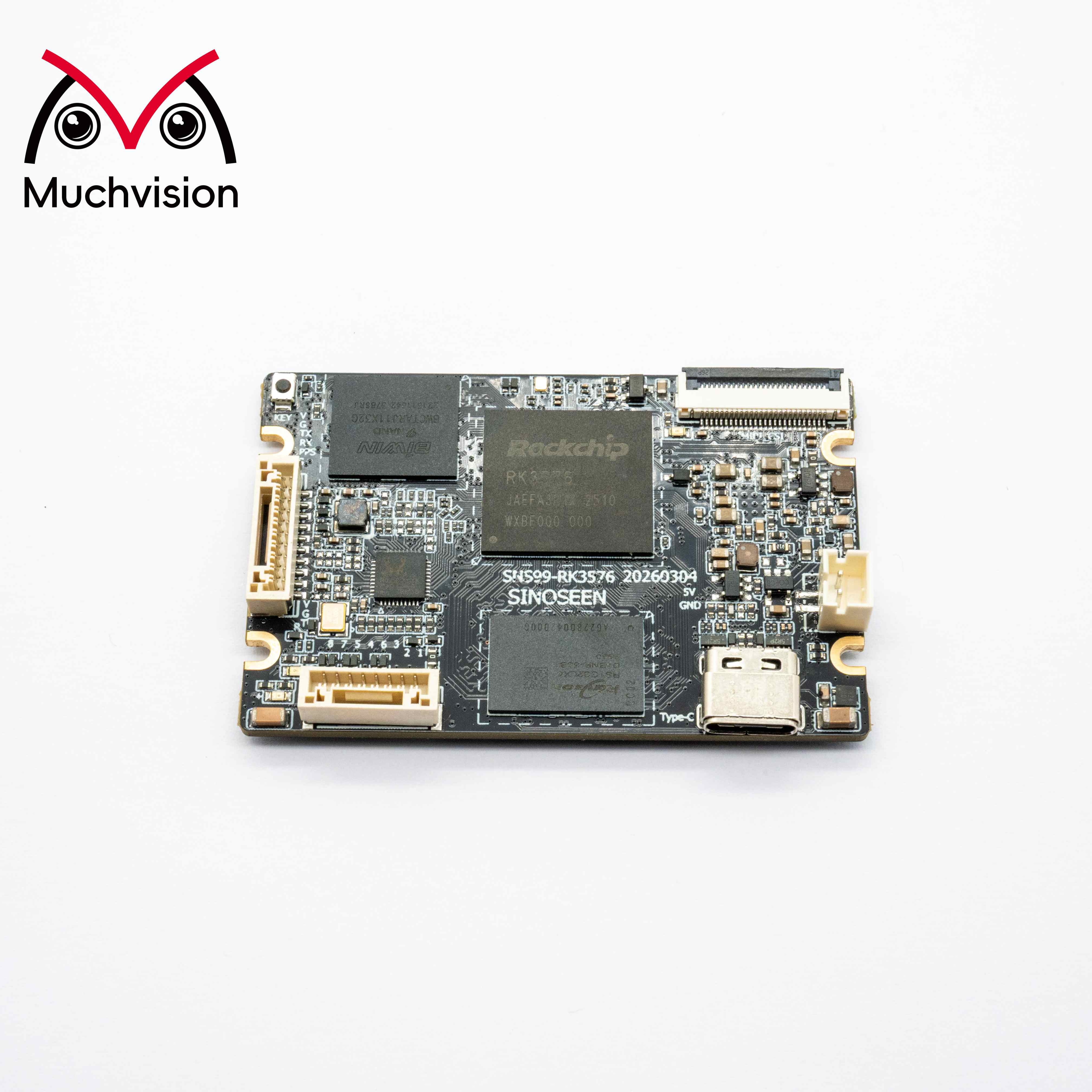
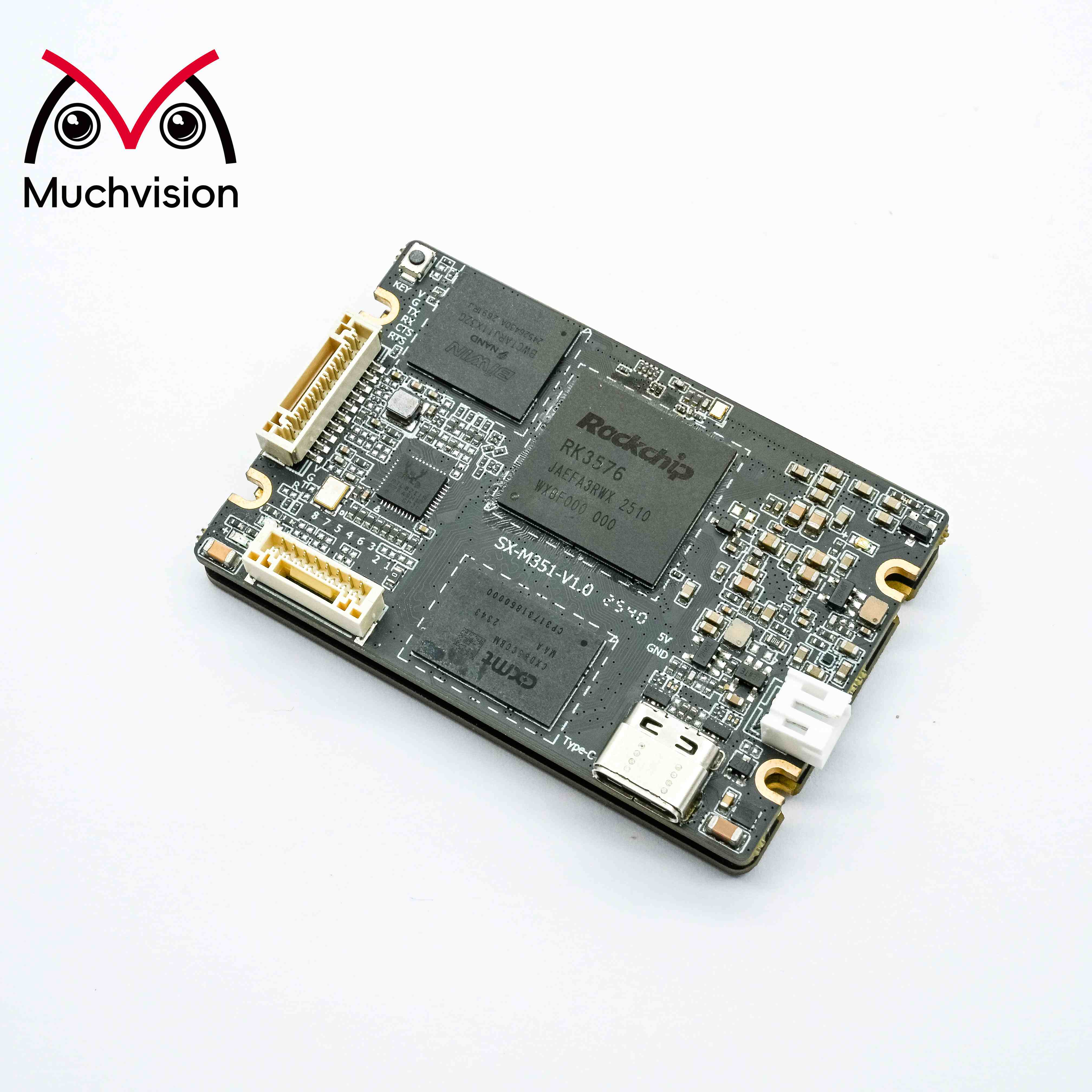
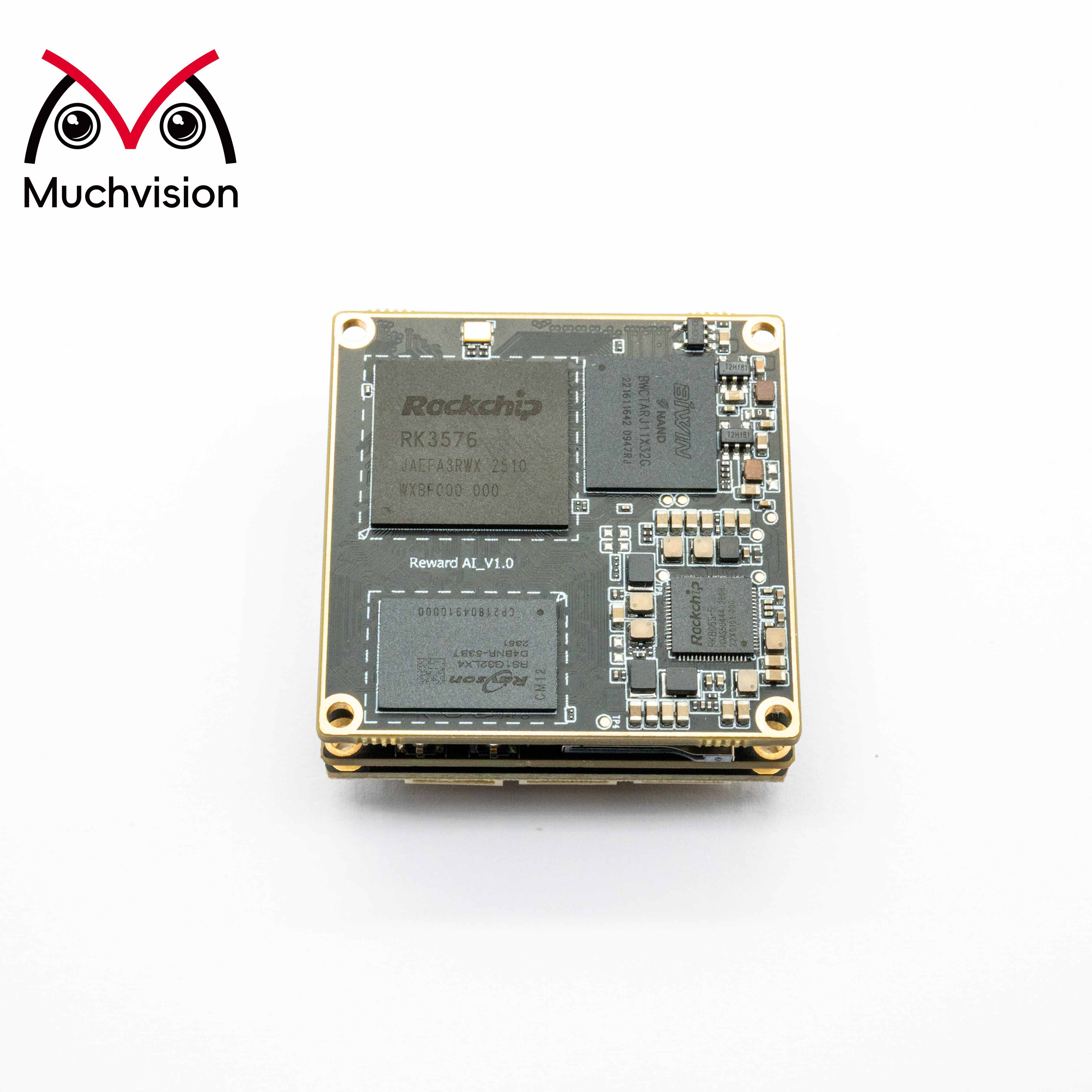
RK3576 |
RK3588 |
Positioning |
Balanced mid-to-high-end AIoT processor with a strong price-to-performance ratio; a lower-cost alternative to the RK3588 |
Rockchip's flagship high-end AI processor and edge-computing platform |
CPU architecture |
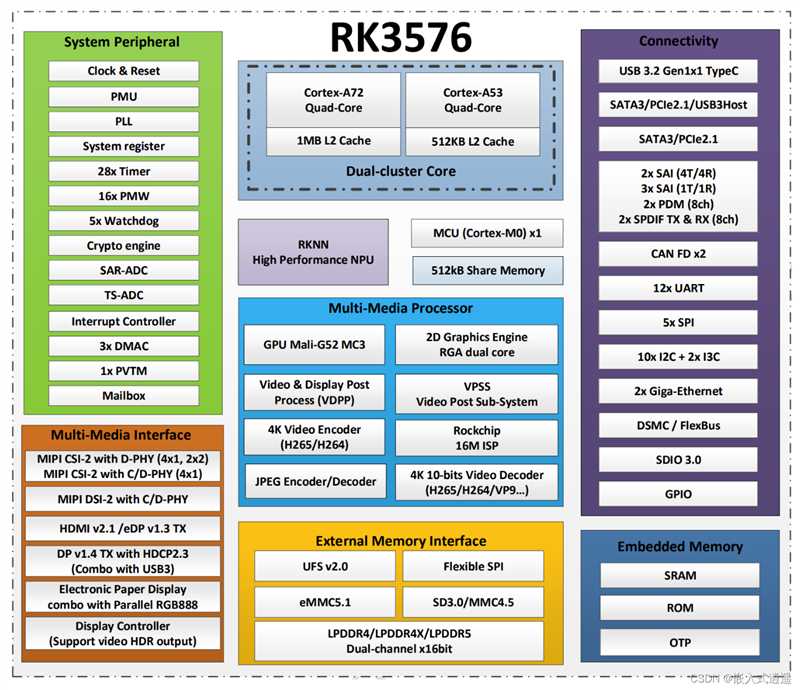
Quad-core Cortex-A72 + quad-core Cortex-A53; 1 MB L2 cache for the A72 cluster and 512 KB L2 for the A53 cluster; includes an Arm Cortex-M0 core for user applications |
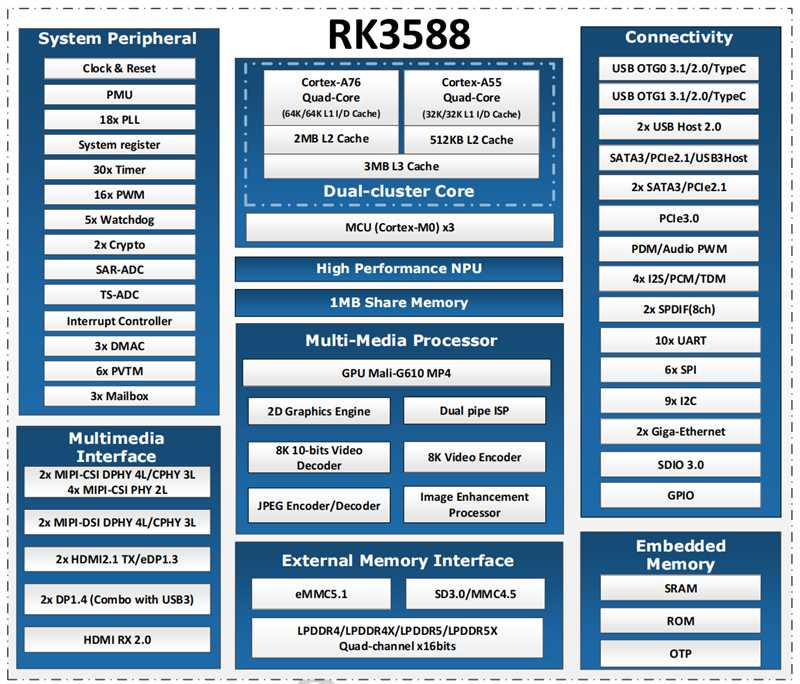
Quad-core Arm Cortex-A76 + quad-core Arm Cortex-A55; each A76 core has 512 KB L2 cache, and the two clusters share 3 MB L3 cache. Better suited to concurrent workloads; overall CPU performance is about 40–60% higher |
GPU |
Arm Mali-G52 MC3; supports OpenGL ES 1.1/2.0/3.2, OpenCL 2.1, and Vulkan 1.2; suitable for lightweight 3D graphics and UI rendering |
Arm Mali-G610 MP4; supports OpenGL ES 1.1/2.0/3.2, OpenCL 2.2, and Vulkan 1.2; around 60–120% higher 3D performance, suited to digital twins and complex 3D interfaces |
NPU performance |
6 TOPS with a single-core NPU; suitable for a single lightweight AI inference workload |
6 TOPS with a three-core NPU; when several tasks run concurrently, overall processing performance is about 30–50% higher and a wider range of AI models can be accommodated |
ISP |
Single ISP processing unit; up to 16 MP on one stream; supports up to five MIPI and two DVP cameras; suited to single-camera and small multi-camera designs |
Dual ISP processing units with greater image-processing capacity; up to 48 MP on one stream; supports up to six MIPI and two DVP cameras, with a clear advantage in high-resolution vision systems |
Video decoding |
Up to 4K at 120 fps; supports 8K at 30 fps for H.265, VP9, and AV1 |
Up to 8K at 60 fps for H.265 and VP9, providing full hardware decoding for 8K video |
Video encoding |
Up to 4K at 60 fps in H.264/H.265; supports dual 4K encoding |
Up to 8K at 30 fps in H.264/H.265 |
Display output |
HDMI 2.1 and DP 1.4; supports three independent displays; up to 4K at 120 fps |
Dual HDMI 2.1; supports 8K at 60 fps and offers more headroom for multi-display output |
High-speed interfaces |
PCIe 2.1, SATA 3.1, dual RGMII Gigabit Ethernet, two CAN FD channels, and a broad set of industrial bus interfaces |
PCIe 3.0 and SATA 3.0 with higher data bandwidth; fewer CAN FD channels and fewer industrial bus options than the RK3576 |
Memory interface |
32-bit LPDDR4/LPDDR4X/LPDDR5 interface; lower bandwidth ceiling; supports up to 16 GB |
64-bit LPDDR4/LPDDR4X/LPDDR5 interface; twice the bus width and higher bandwidth; supports up to 32 GB |
Integrated MCU |
Cortex-M0 for low-power peripheral control |
Integrated MCU focused on low-power management, with fewer dedicated peripherals for industrial real-time control |
Process |
8 nm LP |
8 nm LP |
Typical system power |
About 4.5–5 W at full load; passive cooling is adequate in many designs |
About 8–10 W at full load; active cooling is normally required |
Cost |
About 30–40% lower than the RK3588 |
Higher |
Operating systems |
Android 14/15, Linux, Buildroot, RTLinux, and Debian 12 |
Android 12/13/14/15, Linux, Buildroot, RTLinux, and Debian 11/12; a more mature ecosystem with more open-source material |
Audio peripherals |
Multiple SAI, PDM, and SPDIF interfaces; supports microphone arrays and suits voice-enabled terminals |
A complete set of standard audio interfaces, but no dedicated multi-channel voice-enhancement package |
SDK ecosystem |
Relatively new; community examples are growing, while drivers for industrial real-time applications are well developed |
Mature, with extensive open-source examples, third-party core boards, tutorials, and reference material |
Best-fit applications |
Cost-sensitive products, systems up to 4K, industrial gateways, HMIs, in-vehicle control units, voice devices, AI inference with up to six 1080p streams, and passively cooled equipment |
8K media players, multi-camera security systems, digital twins, AR/VR, high-performance industrial control, AI inference with eight or more vision streams, and memory-intensive applications |
 ×
×
 Hot News
 EN
EN